

What Is My Apartment Building Worth?
How LA Multifamily Is Actually Valued
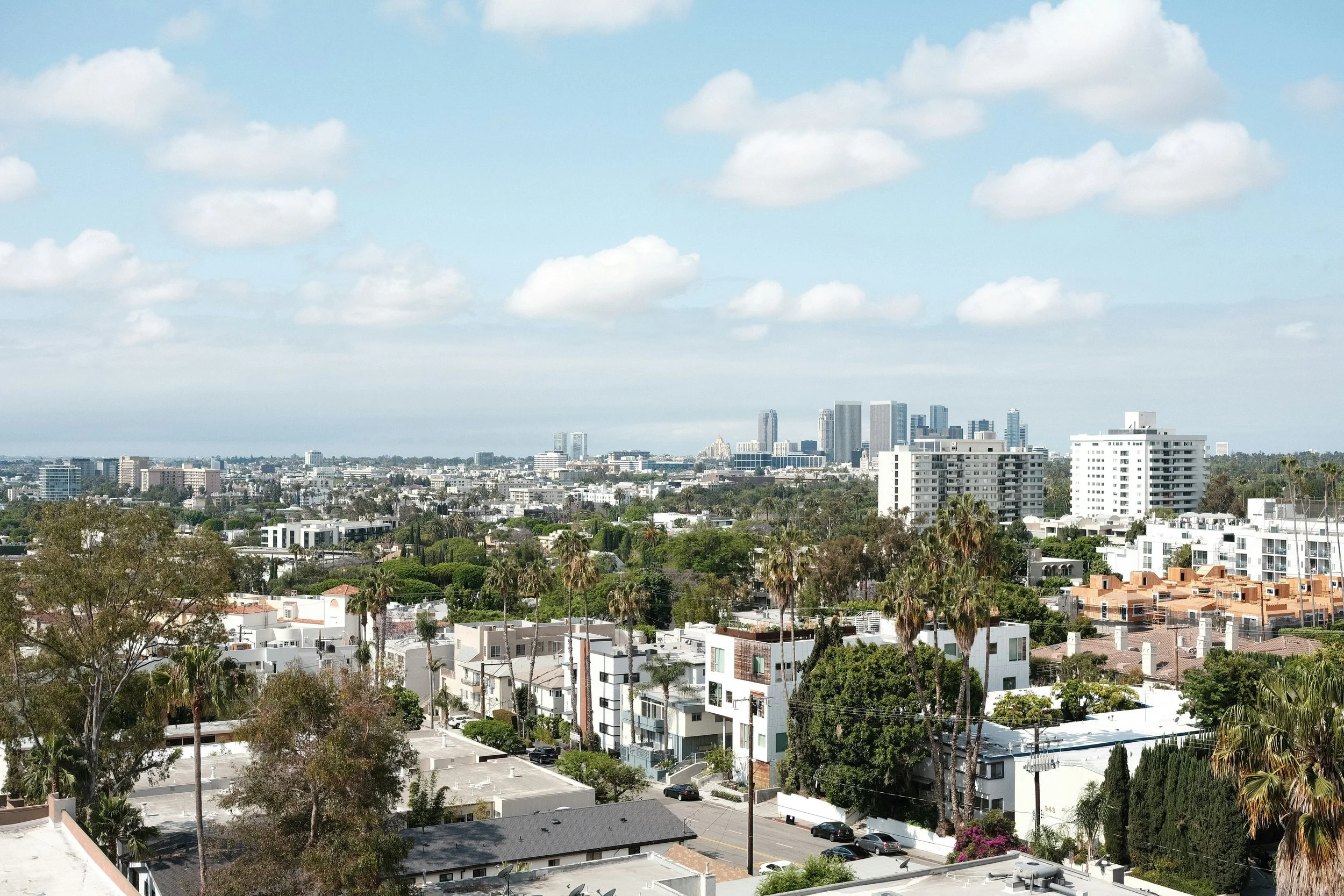
"What's my building worth?" is the question every apartment owner eventually asks — whether you're thinking about selling, weighing a refinance, planning your estate, or just curious after watching the building down the street trade. Here's the problem: most of the answers available to you are either expensive (a $3,000–$5,000 appraisal), wildly inaccurate (online estimators built for houses), or biased (a broker inflating the number to win your listing).
This guide explains how apartment buildings are actually valued in Los Angeles, so you can sanity-check any number anyone gives you — including mine.
The Three Numbers That Drive Apartment Value
1) Capitalization Rate (Cap Rate)
The cap rate method is the most commonly used property valuation approach for multifamily properties in Los Angeles, especially buildings with 5 or more units.
The formula to estimate your property’s value:
Property Value = Net Operating Income (NOI) ÷ Cap Rate
Let’s define both of those:
Net Operating Income (NOI) = Your gross rental income, minus vacancy allowance, minus all operating expenses (property taxes, insurance, maintenance, property management, utilities you cover, etc.). NOI does not include mortgage payments — it’s a pre-debt number.
Cap Rate = The prevailing return rate that buyers in a given market are willing to accept for a particular type of property. Cap rates are set by the market, not by you.
Example: A 10-unit building in Koreatown collects $18,000/month in gross rents ($216,000/year). After accounting for 5% vacancy and $70,000 in annual operating expenses, the NOI is approximately $135,000.
If the current market cap rate for similar properties in that neighborhood is 4.5%, the value works out to:
$135,000 ÷ 0.045 = $3,000,000
With this formula to calculate the value of a multifamily property you can get a rough estimate of what your property is worth, but here’s the critical insight: cap rates are a moving target. They shift with interest rates, investor demand, neighborhood perception, and broader economic conditions. When cap rates compress (go lower), values rise — even if your income stays the same. When cap rates expand, values fall. Over the past decade, LA cap rates compressed dramatically as investor demand flooded the market. In the current higher interest rate environment, we’ve seen some softening, which is worth factoring into your timing.
2) Gross Rent Multiplier (GRM)
The Gross Rent Multiplier is a quicker, rougher tool — think of it as a back-of-napkin check.
It’s calculated as:
GRM = Sale Price ÷ Gross Annual Rents
Or flipped:
Value = Gross Annual Rents × Market GRM
GRMs vary significantly by submarket. In high-demand areas like West LA, Silver Lake, or Los Feliz, GRMs can range from 15–20+. In the San Fernando Valley or South LA, they tend to run lower — sometimes 10–14 depending on the specific pocket.
The GRM is less precise because it doesn’t account for expenses, which vary property to property. But it’s useful for quickly benchmarking where a building sits relative to the market.
3) Price per Unit / Price per Square Foot
Sanity-check metrics. If similar Valley buildings trade at $250,000–$300,000 per unit, and someone tells you your 12-unit building is worth $5 million, something in their math needs explaining.
A real valuation triangulates all three against recent closed sales of genuinely comparable buildings — same submarket, similar vintage, similar rent profile.
What Actually Affects the Value of Your Los Angeles Apartment Building?
Beyond the math, here are the variables I evaluate when I walk a property:
Rent-to-Market Spread
If your in-place rents are 30% below current market rents, a value-add buyer sees significant upside through natural turnover. That potential often gets priced into the offer —sometimes favorably.
Unit Mix
Two-bedroom units drive higher rents and attract stronger demand than studios, generally. A building heavy on larger units often commands a premium.
Physical Condition and Deferred Maintenance A building with a new roof, updated electrical, and renovated units will appraise and sell better than one with deferred maintenance. Buyers factor repair costs into their offers dollar-for-dollar.
Soft Story / Retrofit Compliance
In LA, soft-story seismic retrofit requirements have been phased in for older buildings. If your property has already been retrofitted, that’s a positive. If it hasn’t, buyers will discount for the estimated cost.
Parking and Lot Utility
Properties with ample parking or developable land (potential for ADUs, for example) often carry premium valuations, particularly as LA’s ADU laws have made it easier to add units on existing parcels.
Neighborhood Trajectory
I track submarkets closely. A building in a neighborhood with improving fundamentals — new retail, infrastructure investment, rising renter demand — will trade at a tighter cap rate than a comparable building in a flat or declining area.
What Your Building Is NOT Valued On
This surprises some owners: what you paid for it doesn’t matter. Neither does how much you owe on it, or what a neighbor told you they heard a similar building sold for years ago. The market is strictly forward-looking. Buyers are asking: “What income does this property generate, and what return do I need to justify this price?” Your basis and your loan balance are your financial realities, but they don’t move the market’s math.
Why Rents Below Market Change Everything
In Los Angeles, the gap between your actual rents and market rents may be the single biggest factor in your value. Rent-controlled buildings with long-term tenancies trade differently than stabilized market-rate buildings — value-add buyers pay real money for recoverable rent upside, while formula-driven valuations often miss it entirely. If your rents are meaningfully below market, a valuation that ignores your upside is undervaluing your building.
Appraisal vs. Broker’s Opinion of Value - Whats the Difference?
An appraisal is a formal report by a licensed appraiser. You need one for certain purposes: lender financing, probate, estate tax filings, divorce proceedings. It costs $3,000–$5,000+ for multifamily and takes weeks.
A broker opinion of value (BOV) is a valuation prepared by an active broker using live market data — current listings, recent closings, actual buyer behavior. It's what institutional owners use to make hold/sell decisions.
Here's my honest take as someone who sells apartment buildings for a living: when the question is ‘what would my building sell for,’ a BOV from an active multifamily broker is usually the more accurate tool, because it's built from what buyers are paying right now rather than from backward-looking formulas. Appraisals systematically lag the market in both directions — too low in rising markets, too high in falling ones — and they routinely underprice buildings with rent upside.
And the BOV is free. If you're deciding whether to sell, that's a $4,000 decision-making advantage before you’ve done anything.
(If you need a licensed appraisal for a lender, court, or tax filing, use a licensed appraiser — I'm a broker, not an appraiser, and I'll tell you when an appraisal is what your situation actually requires.)
What a Real Valuation Should Include
When I prepare a free valuation for an owner, it includes: a current rent roll analysis against market rents for your specific area; NOI reconstruction (owners' books and buyers' underwriting rarely match — knowing the difference matters); the cap rate, GRM, and per-unit comps from recent closed sales in your submarket; an honest value range, not a single flattering number; and what would move you toward the top of that range.
If a broker hands you one big number with no comps behind it, they're telling you what you want to hear to win a listing. Ask for the closed sales.
Get a Free Valuation
I provide free, detailed valuations for apartment owners across the San Fernando Valley, Westside, and greater Los Angeles — no fee, no pressure, no obligation. Most owners I work with aren't ready to sell when they first call, and that's fine. Knowing your number is simply good ownership.
NOTE: The information provided on this website and this post is for general informational purposes only and is not intended as financial, tax, legal, or real estate advice. We are not licensed accountants, attorneys, estate planners, or real estate appraisers. All valuations, market analysis, and content are provided as educational information only. Any financial, tax, legal, or real estate decisions should be made in consultation with qualified professionals such as a licensed real estate appraiser, accountant, attorney, or financial advisor. Results and outcomes will vary based on individual circumstances.
Keywords: Los Angeles apartment building valuation, how much is my apartment building worth, cap rate Los Angeles multifamily, NOI apartment building, gross rent multiplier LA, multifamily valuation Los Angeles, apartment building appraisal LA
Get the clarity you need to make your next strategic move.
Contact me for a confidential review of your property.

Jake Plewa
Senior Director, RE/MAX Commercial & Investment Realty — TR Multifamily
310.922.6124 | jake@apartmentvaluation.com apartmentvaluation.com