

Why Every ADU in Los Angeles Is 749 Square Feet
And what two bills in Sacramento could do about it
If you've ever gotten a quote for a backyard unit in Los Angeles, there's a decent chance the number 749 showed up somewhere in the conversation. Not 700. Not 800. Seven hundred and forty-nine.
That's not an architectural preference. It's a fee cliff, and once you see it you can't unsee it.
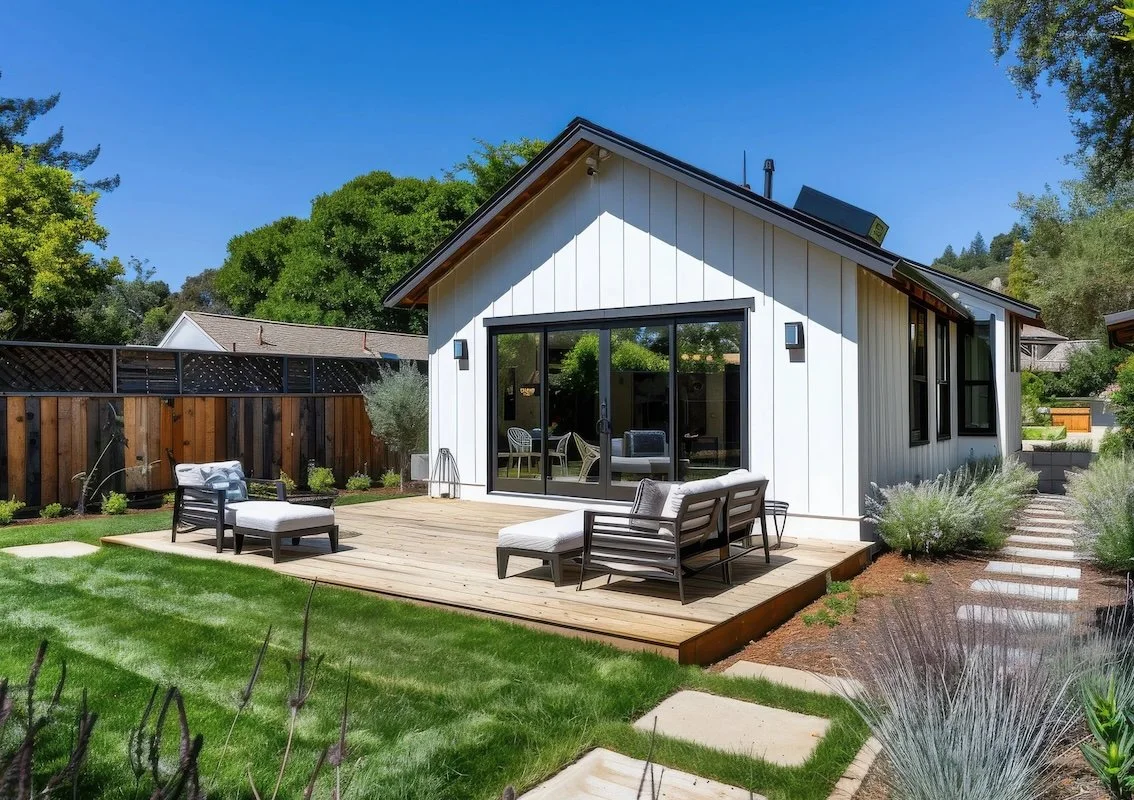
Two bills that just survived a major deadline in Sacramento would change it. Here's what's actually going on, and what it means if you own a house with a yard.
The 750-square-foot cliff
Under current state law, an ADU of 750 square feet or less is exempt from local impact fees — the park fees, transportation fees, and other development charges cities levy on new construction. Cross that line, and your city is allowed to charge impact fees on a proportional basis, scaled to the size of your ADU relative to the main house.
The word "proportional" makes it sound gentle. In practice, in a lot of Southern California jurisdictions, it isn't. Going from 749 square feet to 800 doesn't cost you fifty square feet of construction. It can cost you five figures in fees you owe the moment you cross the threshold.
So homeowners don't cross it. Designers know the number cold. Builders quote to it. And a whole generation of Los Angeles backyard cottages has been recorded in permit files at 749 square feet, chosen by no one, understood by everyone.
It's the architectural equivalent of stopping the gas pump at $49.99.
What just happened in Sacramento
On Thursday, August 13, both of the Legislature's Appropriations Committees cleared their suspense files. If you've never heard the term, it's worth knowing: the suspense file is where bills with real fiscal cost get parked, and on one day near the end of session the committees decide, largely without debate, which ones survive and which ones quietly die. Hundreds of bills didn't make it this year. Two that did are worth your attention.
SB 1117 (Cervantes) would remove the financial penalty jurisdictions impose on ADUs over 750 square feet. It cleared Assembly Appropriations and is headed to the Assembly floor.
AB 956 (Quirk-Silva) would let a homeowner build up to two detached ADUs on a single-family lot, instead of the current one. It skipped Appropriations review entirely — a sign it carries little state cost — and is awaiting a Senate floor vote.
Neither is law. Both need a floor vote by August 31, and the Governor has until roughly the end of September to sign or veto. If signed, the standard effective date is January 1, 2027.
Why this matters more in LA than almost anywhere
Los Angeles is a city built out of single-family lots. That's the whole inventory story. Anything that changes what you're allowed to put behind the main house changes the value of an enormous share of the housing stock all at once.
Right now, the practical ceiling for most homeowners is one detached unit, sized under 750 feet to dodge the fees. That's a studio or a tight one-bedroom. It works for an office, a rental, a place for a parent. It does not work as well for a family member who needs a real bedroom and a real kitchen, or for an owner trying to generate meaningful rental income.
Lift both constraints — bigger units, and two of them — and the calculation shifts:
For homeowners. A 1,000-square-foot ADU is a different product than a 749-square-foot one. It's a two-bedroom. It houses an adult kid with a partner, or aging parents with room for a caregiver, or a tenant paying materially more rent. If you've been putting off a project because the size limit made it not quite worth it, that's the constraint that would move.
For investors. The value of a single-family lot with a usable yard is partly a function of how many units you can eventually put on it. Two detached ADUs plus the main house is a meaningfully different asset than one plus the main house — in rental income, in exit options, and in what a future buyer will pay.
For sellers. Buyers are already pricing in ADU potential, often crudely. If you're listing a property with a big flat yard, side access, or an existing garage, being able to speak precisely about what the rules allow — and what's about to be voted on — is a real advantage. Vague gestures at "ADU potential" are worth less than specifics.
The honest caveats
I'd rather you hear these from me than find out later.
Neither bill is law. The suspense file is a hurdle, not the finish line. Bills die on the floor. Bills get vetoed. Bills get amended into something narrower on the way out the door — that happened to several housing bills this year.
State law sets a floor, not a ceiling on friction. Even when Sacramento removes a barrier, your permitting timeline still runs through the city, and local process has a way of reasserting itself. SB 543, already in effect, requires agencies to review ADU applications for completeness within 15 business days — which tells you something about how the timelines have historically gone.
Your lot may have its own limits. Setbacks, slope, fire hazard severity zone requirements, utility capacity, hillside ordinances, and HOA restrictions all still apply. A statewide bill doesn't override a 40-foot lot width or a septic system at capacity.
Fees are not the only cost. Removing an impact fee penalty makes a bigger ADU cheaper. It doesn't make it cheap. Construction, financing, and utility connections are still the dominant line items.
What I'd actually do right now
If an ADU has been on your list, this is a good moment to do the unglamorous prep work rather than wait for a headline:
Find out what your lot can physically support. Setbacks, access, existing structures. This is free information and it doesn't expire.
Get a real fee estimate at two sizes — under 750 and over. Seeing the actual number for your specific jurisdiction is more persuasive than anything I can write here.
Ask your builder to sketch both scenarios. One detached unit and two. If AB 956 passes, you want a plan, not a starting point.
Watch August 31. That's the floor vote deadline. If both bills clear it, the signing window runs to the end of September.
The worst outcome is that these bills pass and you spend the first quarter of 2027 doing the homework you could have done in the fall, while everyone else is already in line at the permit counter.
The bottom line
Two bills survived a deadline most people have never heard of. If they become law, the two constraints that have shaped every backyard project in this city — one unit, keep it under 750 feet — both loosen at the same time, on the same day.
Nothing is decided. But the fact that both survived August 13 means this is now a real possibility rather than a wish, and it's worth planning around.
If you want to talk through what your specific property could support, reach out. I'm happy to walk through it with you — no obligation, and no pressure to do anything before the votes are in.
Sources: California YIMBY — The Homework, Aug. 12, 2026 · SB 1117 (Cervantes) · AB 956 (Quirk-Silva) · Assembly Appropriations suspense file results, Aug. 13, 2026 · Senate Appropriations suspense file results, Aug. 13, 2026
Disclaimer The information on this page is provided for general informational purposes only and does not constitute legal, financial, tax, or investment advice. Jake Plewa, the Taksa Investment Group, and RE/MAX Commercial make no representations or warranties regarding the accuracy, completeness, or reliability of any data, statistics, graphs, or market information presented. Market conditions change, and past performance is not indicative of future results. You should independently verify all information and conduct your own thorough due diligence, including consulting qualified professionals, before making any decisions related to the sale or purchase of an apartment building.

Jake Plewa
Senior Director, RE/MAX Commercial & Investment Realty — TR Multifamily
310.922.6124 | jake@apartmentvaluation.com apartmentvaluation.com